Exhibiting Knowledge: An Experiential Approach to Research Engagement
ALIA (Australian Library and Information Association) National 2026, Sydney, NSW; 13 May 2026
Abstract: UNSW Library’s Exhibitions Program bridges academic research and student engagement by collaborating with experts to translate complex scholarly work into engaging exhibitions. This approach not only makes research more accessible and understandable but also actively repositions our scholarly collections, including Special Collections, to create unique and enriching research, teaching, and learning experiences.
The Library’s program is underpinned by principles of inclusive pedagogies and sustainable practices, ensuring our initiatives are accessible to diverse learners. Our interactive, immersive exhibitions are evolving projects that generate new knowledge through community involvement. This approach allows a deeper, more dimensional exploration of themes for students. To further this, we leverage exhibitions as powerful educational tools by creating an Experiential Learning program, which is a hands-on, object-based learning initiative designed to develop critical literacy, analytical, and interpretive skills. We collaborate with academics to create workshops that directly link exhibition content to course outcomes, helping students deepen their understanding and allowing academics to assess critical thinking.
Our presentation will demonstrate this process through three recent case studies:
The exhibition Living Water exemplified our approach to making interdisciplinary research tangible. It brought together work from five faculties, connecting research across various environments and disciplines to showcase how scientists, engineers, artists, and policymakers address complex environmental challenges. We complemented this project with Deep Illustrations, a display featuring historical scientific illustrations and rare volumes from our Special Collections. The exhibitions enabled students to connect contemporary research with its historical lineage in scientific inquiry.
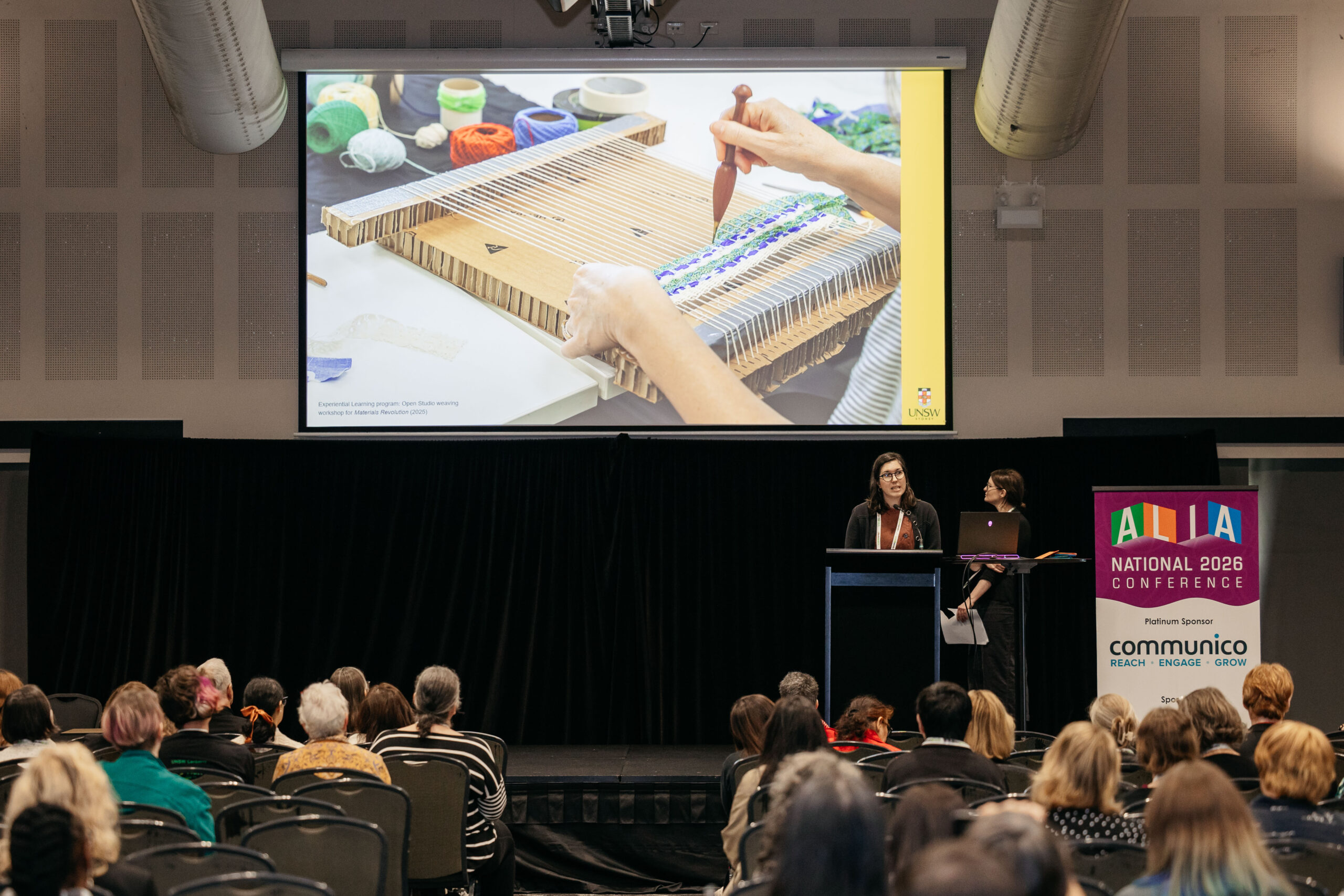
Similarly, the Materials Revolution exhibition showcased cutting-edge research from UNSW SMaRT Centre, revolutionising recycling science by developing innovative solutions for problematic wastes not subject to conventional recycling. To provide historical context, we presented displays at other Library sites featuring texts, diagrams, and illustrations from the Library’s collection to consider radical technological shifts from the 18th century to the present. The Industrial Revolution and Technological Revolution displays connected historical precedents with current scientific frontiers, offering students a layered understanding of innovation.
Our current exhibition, Revealing Riversleigh, focuses on UNSW’s world-leading palaeontological research in the Riversleigh World Heritage Area. To enrich this narrative, we curated Drawn to Extinction, a display featuring rare historical illustrations and scientific drawings of the Tasmanian tiger. The display helped contextualise the Riversleigh fossils within the broader history of how we have documented and understood evolution, adaptation, and extinction. The projects encourage students to consider both the scientific process and the cultural aspects of knowledge creation, generating a powerful narrative about the fragility of life, and the importance of conservation efforts in the face of climate change.
This presentation will demonstrate how the UNSW Library’s Exhibitions Program is a powerful tool for community engagement and for transforming the perception and use of our scholarly collections. We create dynamic, immersive, and pedagogically sound experiences that enrich the research and learning ecosystem for the University community. Our Exhibitions Program highlights the significance of collections by drawing upon them to explore contemporary societal issues, creating a space for open dialogue and knowledge sharing.