
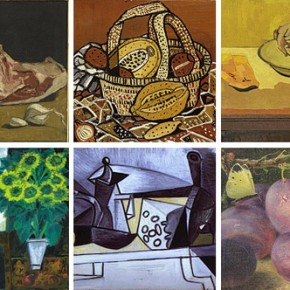
Conclusion: The Colour Project
{The Colour Project} redartist – Claude Monet, recipe – Steak Tartareartist – Hung Liu, recipe – Rhubarb Tart orangeartist – Margaret Preston, recipe – Thai Papaya Saladartist – Carsten Höller, recipe – Marinated Chanterelles yellowartist – Gustavo Montoya, recipe – Banana Flanartist – Wolfgang Laib, recipe – Pollen & Turmeric Rice greenartist – Lin Fengmian,...
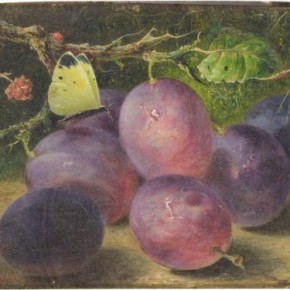
Colour Purple – Benjamin Roberts – Baked Custard with Plums
Adorning the cloaks and garments of royalty, the colour purple was often called imperial purple due to the close association. The word purple is a derivative of the original Greek porphura, the name of the Tyrian purple dye of antiquity extracted from a spiny snail. The pigment was extremely expensive to produce and only the...
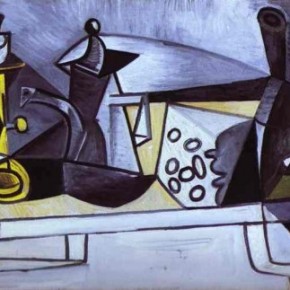
Colour Blue – Pablo Picasso – Broccoli + Blue Cheese Soup
The colour blue – reserved for the robes of the holiest of mothers – was one of the rarest and most expensive pigments in use during the Renaissance. For the depiction of Virgin Mary, only ultramarine was used due to its price and elusiveness as it is was found only in Asia and is presently...
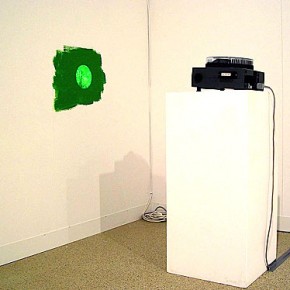
Colour Green – Jonathan Monk – Greens Salad
Green is one of the most abundant colors; there are greens in every imaginable shade and tone throughout the world’s natural landscapes. From green algae to rainforest canopies, green permeates and dominates in its diversity. Individual greens are often blurred as countless plants merge into a color field, many overlapping green leaves forming the density...
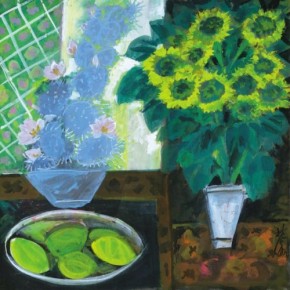
Colour Green – Lin Fengmian – Hot & Sour Lime Soup
When considering the colour green, there are a number of connotations that are promptly conjured; green is the colour of money and wealth, through which one can become ‘green with jealously.’ Likewise, it is the colour of nature, growth, and life and one can have a ‘green thumb.’ It is within the secret green porcelain...
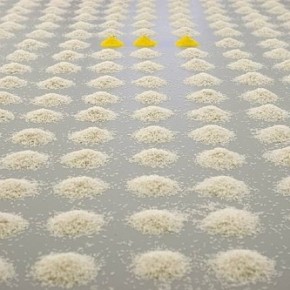
Colour Yellow – Wolfgang Laib – Pollen and Turmeric Rice
Subtleties of taste, texture and tone – a simple meditation on the infinite. Made of rice and pollen meticulously mounded across the floor, Wolfgang Laib’s 2007 work, Ohne Zeit – ohne Ort – ohne Körper, acts as an ephemeral testimony to existence in its rawest forms. Amidst the grid work of rice mountains, the glowing...
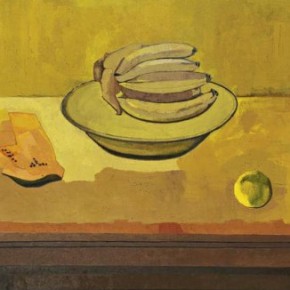
Colour Yellow – Gustavo Montoya – Banana Flan
Yellow is a colour of juxtapositions. In the natural world, animals and insects cloak their bodies (often in conjunction with the colour black) to signify poison, danger. Likewise, it is the colour of death, the sallow skin of a sick person and the brilliant autumnal yellow of leaves before they fall to the ground. The...
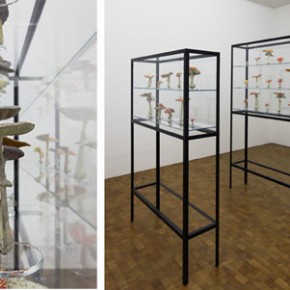
Colour Orange – Carsten Höller – Marinated Chanterelles
Beautiful butterflies, stunning flowers, and fruiting trees attract and deflect attention with their often intricate colouration. Targeted for particular audiences, a single color can carry conflicting messages. In nature, orange signals vitamin rich potency and likewise poisonous lethal doses, though it also functions simply as a scare tactic. In works by artist Carsten Höller, orange...
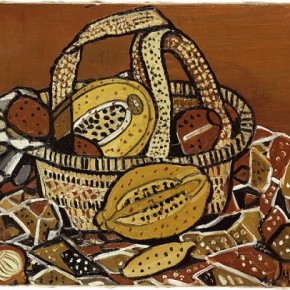
Colour Orange – Margaret Preston – Thai Papaya Salad
The colour orange has always been one of warning used for it’s eye-catching qualities to delineate danger. The pigment was produced through a difficult process of grinding down madder, the pink root of a small bush. Madder is often used to make ‘rose madder genuine’ watercolor paint but when used as a dye, a rich...
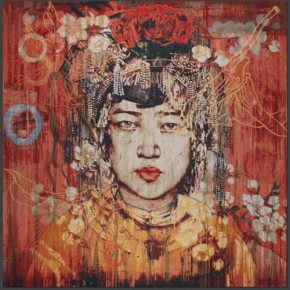
Colour Red – Hung Liu – Rhubarb Tart
Hung Liu’s artistic production is a process of recollection – a symbolic excavation. Having weathered the re-education of artists vis-a-vis Mao’s Cultural Revolution and immigration to the U.S. in 1984, Hung Liu’s influences are richly transcultural. She is known as one of the very first Chinese artists to study within the U.S. and has since...
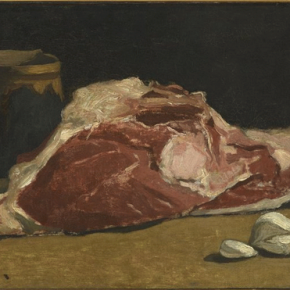
Colour Red – Claude Monet – Steak Tartare
In the mid-16th century, Spain began importing a vibrant red pigment from the New World that was so highly sought after that the source was held as a national secret. The dye was extracted from the blood of a female cochineal, a wingless insect that lives upon the leaves of the prickly pear. The dye...
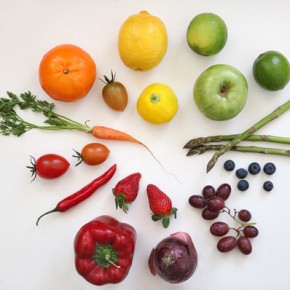
Colour Project
The colour of a food or dish plays an important role in its appeal. Before tasting a tomato, we know that if it is green, it is unripe. These inherent expectations of the natural colouration of the world around us present an interesting challenge to artists. To represent skin tones in a portrait or the...